
Deck Cleaning Fundamentals
Pressure washing basics for wood decks: PSI, nozzle choice, and detergent use
In South Africa, a deck isn’t merely timber; it’s a stage for braais and golden-hour gatherings. “A deck that shines is a memory you can walk on,” goes the saying, and the craft of pressure washing and staining a deck makes that memory bright again. Gentle cleaning reveals grain and colour long masked by grime, turning weathered boards into welcoming planks of possibility.
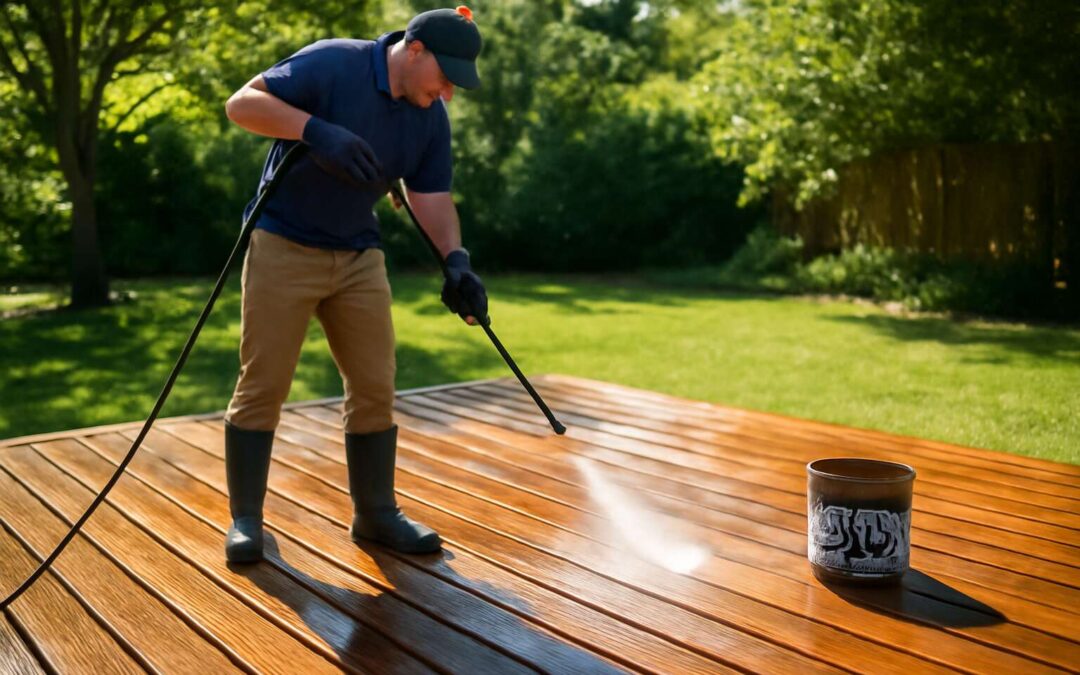
Fundamentals begin with pressure. For wood, balance cleaning power with surface care. A broad range—roughly 500 to 1500 PSI—serves many species, while a soft fan nozzle (25 to 40 degrees) lifts grime without grinding grain or dulling finish.
- PSI considerations that respect wood’s fibre
- Nozzle choices that diffuse the spray and protect joinery
- Detergent compatibility that lifts grime without harsh residues
When these elements align, the timber breathes anew, and the promise of a renewed finish feels almost lyrical as light returns to the deck.
Safety and prep to protect plants, pets, and surrounding surfaces
In South Africa, a deck isn’t just timber; it’s a social stage for braais and golden-hour greetings. A deck that shines is a memory you can walk on—so the craft must respect both timber and time, not merely blast grime.
Safety and prep are the unsung co-stars. In my line of work, safety isn’t an afterthought—it’s the first principle.
- Protect plants and water features from overspray
- Shield adjacent surfaces and outdoor furniture
- Keep pets and children away from the work zone
A polite approach also means minding the garden’s rhythm—pre-wetting beds, boxing pots, and choosing detergents that won’t scorch soil or tile.
When these considerations are in place, pressure washing and staining a deck reveals grain and colour, turning weathered boards into welcoming planks of possibility.
Inspecting and repairing the deck before washing: boards, nails, and loose hardware
In South Africa, a deck is more than timber; it’s a stage where braais, laughter, and sunset greetings unfold. Before washing, I listen to the surface—the grain’s whispers, the way boards have weathered, the quiet signs of strain. Inspecting and repairing the deck before washing keeps the memory honest and the structure trustworthy, rather than letting hidden flaws undermine the shine. Look for warped planks, protruding nails, and loose hardware whispering for attention.
- Warped or cracked boards
- Protruding nails or corroded screws
- Loose joist hangers and hardware
With the inspection complete, the terrace reveals its honesty and potential. This is the moment the narrative moves from assessment to renewal—pressure washing and staining a deck.
Choosing cleaning products: biodegradable detergents and eco-friendly options
In South Africa, a deck is more than timber—it’s a stage for braais and sunset greetings. A clean, well-chosen approach makes gatherings glide smoothly and the grain glow. This guidance supports successful pressure washing and staining a deck, delivering durability without harsh tradeoffs.
Opt for biodegradable detergents and eco-friendly options to protect soil, plants, and pets. Non-toxic, phosphate-free formulas cut grease without leaving harmful residues. These choices harmonize with your deck’s wood and the surrounding landscape.
- Plant-based, biodegradable detergents that break down grime
- Phosphate-free and non-toxic formulas friendly to soil and greenery
- Neutral pH options that preserve wood oils and color
This approach keeps the narrative honest, inviting, and sustainable as you refresh the space for another South African summer.
Staining Prep and Material Selection
Understanding stain types: transparent, semi-transparent, solid
South Africa’s blazing sun keeps decks honest—and honest prep is the secret to lasting beauty. From the first scrub to the final touch, pressure washing and staining a deck tells a story of grain, light, and endurance.
- Transparent: lets the wood grain glow with a light touch and minimal colour.
- Semi-transparent: adds warmth while preserving texture and character.
- Solid: delivers rich colour and hides surface blemishes for a durable finish.
Material selection hinges on climate, species, and the maintenance rhythm you envision. Choose finishes that offer UV stability and mildew resistance, preferences valued in South Africa’s sun. The right balance of protection and beauty emerges when colour, grain, and weather meet in harmony.
Selecting the right color and finish for your wood type and climate
South Africa’s sun tests timber daily; UV fades deck colour far faster than indoors. That reality makes staining prep and material selection vital. Consider the wood’s grain, porosity, and climate’s weathering.
Choosing color and finish for your wood type and climate means balance. Lighter transparent washes keep grain, while solid stains add colour and hide flaws. For South Africa’s sun, UV stability and mildew resistance matter.
- Wood species and porosity shape finish absorption
- Climate and sun exposure dictate UV resilience
- Maintenance rhythm guides long-term durability
In practice, pressure washing and staining a deck becomes a patient ritual—careful prep, thoughtful color choice, steady protection!
Moisture content and wood condition: when to stain
South Africa’s sun turns timber into a daily test, and moisture is the quiet judge. The wood’s moisture content is the gatekeeper: when boards hover around 12% to 15%, staining films can cure evenly; above that, adhesion falters and mildew creeps in. Timing matters, because this is pressure washing and staining a deck treated as a patient ritual, not a rush job.
- Moisture status and equilibrium: ideally in the 12%–15% range to promote even adhesion
- Wood condition: no soft spots, checks, or loose boards—soundness matters
- Porosity and grain: open grain accepts finish, while compact sections may demand deeper prep
Wood grain and porosity dictate how a finish sits in SA’s variable climate. When readiness aligns, the pigment rides the grain and offers lasting protection rather than sitting on top. Patience here preserves colour and lifespan for years to come.
Sanding vs. cleansing: prepping the surface for optimal absorption
Between storm-wreathed skies and sun-bent timbers, prep is the quiet rite that commits a deck to its fate. When pressure washing and staining a deck is undertaken, you are not blasting grime away; you are setting a stage for pigment to bite the wood’s soul. The choice between sanding and cleansing shapes every subsequent coat, determining how evenly colour will ride the grain in SA’s fickle climate.
Consider these distinctions:
- Sanding opens the grain, inviting pigment to tuck into every crevice.
- Cleansing removes old film and contaminants that would resist adhesion.
Material selection then follows: open-grain, softwoods drink stain more readily; dense woods demand different film builds—an artful balance rather than a habit.
Application Techniques for Staining and Sealing
Applying stain with brush, roller, or sprayer: pros and cons
A recent survey finds 78% of deck failures start with a rushed stain job. When you’re involved in pressure washing and staining a deck, the tool you choose—brush, roller, or sprayer—will decide whether the finish lasts seasons or fades by the next long weekend.
Each method has a vibe. A brush offers control and intimate wood contact; a roller speeds coverage on flat boards; a sprayer can kiss tight corners but risks overspray. Here are the quick pros and cons to help you weigh options without turning it into a lab experiment:
- Brush: precise, low overspray, but slower on large surfaces.
- Roller: quick, even laydown; can miss grain detail and corner work.
- Sprayer: fastest, uniform saturation; requires masking and more setup.
In SA’s climate mix—dry winters, humid summers—your choice affects absorption and longevity. The right balance keeps grain visible and the color true, without a blotchy postcard of mismatched tones.
Even color: back-rolling, overlapping, and working in sections
For even color in pressure washing and staining a deck, master back-rolling, deliberate overlapping, and working in sections. Back-rolling after applying stain helps push pigment into the grain and irons out pooled edges. Overlap each pass slightly and align cuts with board runs to avoid visible seams. This keeps color true across boards!
- Back-rolling after the initial pass pushes stain into the grain and evens saturation.
- Overlap each stroke by about half to three-quarters of a board to avoid lap marks.
- Work in sections that follow board lines and shade to keep a wet edge.
In SA’s climate mix—dry winters, humid summers—this rhythm keeps grain visible and color true for pressure washing and staining a deck. Plan for ideal conditions and proper drying times to avoid blotches.
Drying times, humidity, and temperature considerations
Humidity isn’t just a mood—it’s a schedule. In South Africa, dry winters collide with humid summers, turning wood drying times into a moving target and turning patience into a superpower.
Plan around drying times, humidity, and temperature. When planning pressure washing and staining a deck, pick days with low surface moisture and air between 18 and 25°C. In hotter or more humid spells, cure times stretch; rain or dew can halt progress mid-coat.
- Ambient humidity and wind speed influence how quickly finishes set
- Wood moisture content at application affects pigment absorption
- Forecasted rain, dew points, and shade availability shape timing
With the right atmospheric balance, color stays true and grain stays visible.
Protecting edges, railings, and spindles during stain application
Decks in the South African sun demand a finish that resists the heat while embracing the wood’s character. In the cadence of pressure washing and staining a deck, protecting edges, railings, and spindles during stain application is essential to a pristine, even color.
- Edge protection to prevent bleed and uneven tone at joints
- Guarding rails and spindles to keep surfaces clean and crisp
- Maintaining graceful transitions so the grain remains legible
When edges stay crisp, the grain remains legible, and the overall mood of the deck endures under SA skies. The aim is a seamless balance between shade and sun, allowing the finish to settle with depth while preserving the natural beauty of the timber.
Maintenance and Longevity of a Stained Deck
Curing times and initial care after staining
Maintenance magic hides in the cure. In South Africa’s sun and shifting humidity, the longevity of stained wood depends on how patiently the pigment settles. “The cure is the contract the wood signs with its future self,” a veteran deck craftsman often says. This is true for pressure washing and staining a deck, where the finish must breathe and harden together.
Curing times vary with climate, typically stretching from several days to a few weeks. The rate is shaped by environment and wood. Factors:
- Humidity and temperature
- Direct sun versus shade
- Wood species and stain type
During the initial care after staining, the wood settles into its color as the film cures. In SA, sudden showers and strong sun sculpt the sheen; a quiet patience in this phase helps the finish reveal its true depth and perform longer against the elements.
Re-coating intervals: when to re-stain or seal
Sunlit timbers in South Africa wear a regal crown; maintenance and longevity hinge on patience as pigment settles into the grain. This dance—pressure washing and staining a deck—keeps the timber breathing and color true.
Intervals between re-coats aren’t fixed; they bend with sun, humidity, wood species, and the chosen stain. A deck in blistering sun may wear faster than one in shade, while moisture speaks when a new seal is due.
- Fading color
- Surface roughness or peeling
- Loss of water beading
In this rhythm, longevity reveals the deck’s tale—the timber, sun, and wind writing a gentler cadence. The finish lives longer when the cadence is observed, allowing the film to breathe with the wood.
Cleaning and maintenance between finishes to extend life
Longevity is a quiet dialogue between South Africa’s sun, timber, and patience. When performing pressure washing and staining a deck, maintenance between finishes becomes the hinge that keeps color true and timber breathing. A disciplined cadence preserves grain, resists mould, and delays costly refinishes.
Between coats, light cleaning with a soft brush and biodegradable detergent keeps dust and tannins at bay without sealing moisture. Avoid aggressive power washing near joints; allow boards to dry fully, then assess for staining when the wood shows even moisture uptake.
With this rhythm, your deck ages with dignity, weathering seasons—from scorching SA sun to sudden rains—without surrendering its warmth.
Seasonal care and weatherproofing best practices
Season after season, a well-tended deck ages with dignity and often lasts up to 40% longer than its neglected cousins. In the SA climate—long sunlit afternoons followed by sudden showers—patience and protection become the quiet architects of longevity. A deck that breathes, then seals, earns time as an ally.
Maintenance and longevity hinge on rhythm. In the realm of pressure washing and staining a deck, restraint matters as much as force: gentle cleansing between finishes, careful moisture assessment, and even drying before any coating checks the color’s resolve.
- Seasonal checks: inspect joints and grain for cracks
- Between rains: gentle cleaning to curb mould
- Drying windows: ensure even moisture uptake before staining
Guarded against SA’s sun and rain, the timber keeps its warmth longer, weathering seasons with quiet confidence.
