MDI Hydroblasting and Vacuum Specialist is a Commercial cleaning service establishment in Richards Bay, KwaZulu-Natal, South Africa
MDI Hydroblasting and Vacuum Specialist – Summary of Services and Customer Experience
MDI Hydroblasting and Vacuum Specialist operates from Alton, Richards Bay, KwaZulu-Natal, providing a range of industrial cleaning services designed to support heavy industry and infrastructure. The company presents itself as a specialist in hydroblasting, industrial vacuuming and desludging/dredging operations, with a focus on high-pressure water jetting, vacuum extraction and sediment removal. The service mix is positioned to address demanding cleaning and maintenance tasks across processing plants, waste facilities and coastal or mining-related environments.
Hydroblasting is described as a surface-cleaning technique that uses the energy of water at high pressure to clean without the use of abrasives. This method is highlighted as suitable for challenging cleaning scenarios where abrasive blasting is not desirable, aiming to remove coatings, residues and contaminants while minimising substrate damage. The equipment profile for hydroblasting includes trailer-mounted high-pressure jetting machines with pressures ranging from 550 bar to 2,800 bar, underscoring the capability for both light and heavy-duty cleaning requirements. The emphasis on water-based cleaning aligns with industries seeking controlled, non-abrasive operations.
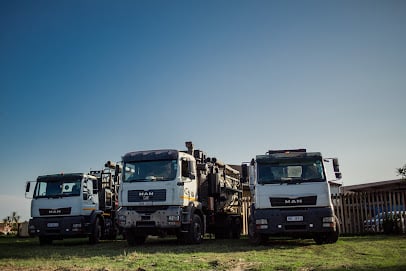
The Truck Mounted Vacuum Cleaning service is framed as essential for outdoor and remote settings, with particular relevance to manufacturing operations. Targeted sectors include petroleum, wastewater treatment, sanitation, commercial aviation, agriculture and disaster response. The use of truck-mounted vacuums reflects a strategy for rapid mobilisation and extraction across varied environments, enabling efficient removal of liquids, sludges or debris where access may be challenging or on-site handling is necessary for safety and compliance.
Industrial desludging and dredging constitutes the third core area, addressing the removal of sediments from diverse industrial contexts. The company indicates capability in dredging across mines, estuaries, dams and lakes, suggesting a breadth of equipment and process expertise suitable for water management, refurbishment projects and environmental maintenance. This service complements the other cleaning offerings by preparing substrates and waterways for operation, rehabilitation or environmental compliance tasks.
MDI communicates a clear commitment to safety, quality and regulatory compliance. The Integrated Management System Policy notes adherence to a safety management framework aligned with the OHS Act, and references the use of ISO 45000 guidelines to support Total Quality Management, environmental stewardship and risk management. The policy statements indicate a culture of staff training, competent personnel and regular audits by clients, illustrating a customer-focused approach to safety and quality assurance.
From a practical standpoint, the service portfolio also includes a broader industrial application list. Typical uses cited include process pipe cleaning, heat exchanger cleaning, ultra-high-pressure cleaning, tank cleaning without vessel entry, spill and fire damage cleanup, boiler and clarifier cleaning, and various forms of environmental and maintenance work such as paint stripping and bund area cleaning. This breadth suggests MDI positions itself as a versatile partner for complex maintenance regimes in chemical, mining, pulp and paper and municipal contexts.
Customer feedback from online visitors reflects a generally positive reception. Review snippets describe MDI as “professional” and “excellent” in their field of high-pressure cleaning, vacuuming and related services. The presence of multiple five-star assessments over a multi-year period contributes to an impression of reliability and expertise in industrial cleaning disciplines.
For clients considering engagement, several practical tips emerge from the available information. Ensure clarity on the scope of high-pressure capabilities and required safety protocols, particularly where hydroblasting is used near delicate substrates or sensitive equipment. Discuss site access and mobilisation needs for truck-mounted vacuuming, as outdoor or remote sites may benefit from scheduled dispatch windows. When desludging or dredging is involved, confirm sediment handling requirements, disposal channels and any regulatory permits relevant to dams, estuaries or mines. It is advisable to review safety and environmental commitments, including adherence to OHS Act provisions and environmental policies, to align project plans with organisational standards.
The company operates from Richards Bay and serves the KwaZulu-Natal province, with stated client profiles spanning pulp and paper, chemical, mining, petrochemical, sugar, and municipal sectors. The contact details indicate accessible lines for project enquiries, while the overall presentation emphasises safety, environmental responsibility and quality assurance as core operational principles. The combination of specialised equipment, industry reach and documented safety commitments positions MDI as a potential partner for substantial industrial cleaning and sediment management tasks in the Richards Bay region.
Richards Bay
KwaZulu-Natal
South Africa
Sorry, no records were found. Please adjust your search criteria and try again.
Sorry, unable to load the Maps API.
Commercial Cleaning Services in Richards Bay, KwaZulu-Natal
In Richards Bay, KwaZulu-Natal, commercial cleaning services form a essential component of facility maintenance for offices, retail spaces, industrial sites, and hospitality venues. Local providers typically offer a range of practical cleaning solutions designed to keep work environments tidy, hygienic and compliant with health and safety expectations. The coastal setting and climate can influence cleaning routines, with considerations for salt air, humidity and seasonal grime that may impact interior and exterior surfaces alike.
Most commercial cleaning packages begin with a tailored assessment. Cleaning professionals visit sites to understand floor types, traffic patterns, and specific client requirements. This initial evaluation informs a cleaning timetable, the chosen products and equipment, and the allocation of trained staff. Routine services commonly include general housekeeping tasks such as daily janitorial duties, waste disposal, and maintenance of communal areas. In addition, many customers require periodic deep cleaning to address dirt accumulating in high-traffic zones, behind equipment, or within hard-to-reach spaces.
Floor care represents a central aspect of service provision. Scrubbing and polishing of hard floors, vacuuming of carpeted surfaces, and specialised treatment for vitrified tiles or vinyl flooring are common features. Flooring plans often factor in footfall intensity, spill risk, and potential wear from equipment wheels. Surface cleaning extends to desks, workstations, glass partitions, doors, and skirting boards, with attention paid to grease in kitchens, break rooms, and entrance areas. Exterior cleaning may also be included, such as litter removal, window washing, and soft washing of building façades where appropriate and safe.
Hygiene and sanitisation have gained particular prominence in recent years. Cleaning teams frequently employ disinfectants and methods aligned with local regulations and the nature of the premises. Restroom hygiene services, including dispensers replenishment, sanitising of fixtures, and high-touch surface cleaning, are typically part of the offer. For facilities handling food, strict adherence to cleanliness standards and proper food-contact surface sanitation is emphasised, along with waste management that minimises odour and pest concerns.
Staffing and scheduling are designed to minimise disruption to business operations. Flexible plans may offer after-hours or weekend cleaning to maintain productivity during business hours. A standard approach involves clearly defined tasks and timeframes, with supervisors or site managers monitoring performance, ensuring consistency and compliance with agreed standards. Training on safe chemical handling, equipment operation, and slip-prevention practices is commonly highlighted, reflecting a commitment to workplace safety and environmental responsibility.
Equipment and products are chosen to suit regional conditions. Reliable vacuum cleaners, automatic scrubbers, and floor polishers are used, along with colour-coded cloths and mops to prevent cross-contamination between zones such as offices, kitchens, and restrooms. Cleaning agents are selected with consideration for effective results, material compatibility, and environmental impact. In coastal areas like Richards Bay, attention to corrosion and salt-related wear may influence maintenance plans for metal fixtures, door hardware, and external surfaces.
- Typical deliverables include routine cleaning, deep cleaning, floor care, window and facade cleaning, waste management, and hygiene services.
- Clients can expect clear scheduling, reliable on-site supervision, and transparent communication regarding any adjustments to services.
- Practical considerations encompass access arrangements, security protocols, health and safety compliance, and contingency planning for peak periods or inclement weather.
Overall, commercial cleaning services in Richards Bay aim to deliver consistent cleanliness, hygienic environments and a sense of well-maintained professionalism across diverse premises. The approach centres on customised plans, practical routines, and dependable execution, ensuring facilities remain welcoming and operational irrespective of the coastal climate and busy business cycles.