JJM FILTRATION is a Blast cleaning service establishment in Sasolburg, Free State, South Africa
JJM Filtration: Blast Cleaning Services in Sasolburg, Free State
JJM Filtration PTY LTD has been delivering specialised high-pressure cleaning solutions to the local and regional industry since 1999. Operating from Sasolburg in the Free State, the company positions itself as a provider of comprehensive blast cleaning and associated services, leveraging a diverse fleet and a focused commitment to safety and efficiency on a wide range of industrial projects.
The core offering centres on high-pressure water jetting, complemented by vacuum services, chemical cleaning, decontamination, demolition of small plants, and shutdown work. The business emphasises practical capability across the lifecycle of plant facilities, from routine maintenance to major shutdowns, with an emphasis on rapid response and reliable service. The in-house resources include a full range of jet cleaning machines capable of handling pressures from 0 to 2800 bar, as well as vacuum units and chemical cleaning rigs designed to support complex site operations.
Blast cleaning is presented as a central capability, supported by a suite of related services that enable the preparation, cleaning, decontamination and reconditioning of equipment, pipelines and plants. This includes the removal of coatings, scale and contaminants from process equipment, tanks and lines, using high-pressure water jetting in conjunction with appropriate downstream handling of effluents and waste materials. The organisation also highlights its chemical cleaning expertise, backed by a dedicated rig with a 1000-litre capacity for pickling, enabling more specialised surface preparation when required.
In addition to cleaning services, JJM Filtration offers vacuum cleaning with its own tank-tipped units, designed to mobilise quickly to sites and accommodate 24/7 response in certain scenarios. This capability supports the collection and disposal of effluents and other products, aligning with site environmental and safety requirements. The equipment mix includes mono pumps, diaphragm pumps and diesel pumps to handle varied fluid handling tasks that may accompany blast cleaning projects.
Safety and project controls are foregrounded through mentions of hazard and risk assessment practices. The service portfolio includes “Procedural HAZOP Studies and Risk Assessments” to determine exposure during decontamination and demolition work, reinforcing the emphasis on protecting workers and the surrounding environment. The company asserts a track record of zero injuries on cyanide decontamination, demolition and related projects in the mining sector, underscoring a safety culture that permeates its on-site activities.
Typical job types, as described in the available materials, span chemical cleaning projects, cyanide decontamination and disposal in mining, plant and equipment decontamination, demolition of small plants and contaminated equipment, as well as major and minor shutdown campaigns. The service footprint extends to industries such as chemical processing, petroleum, mining and related sectors, which commonly require high-pressure cleaning, effluent management and controlled demolition where minimal risk is essential.
Customer experience appears to benefit from a responsive on-site presence and a broad resource pool. The company outlines a ready-to-deploy fleet of five vacuum units, a chemical cleaning rig, a range of high-pressure machines, and mobile pumping capacity. This combination supports quick mobilisations, on-site efficiency and continuity of work, even in remote or challenging environments. Visitor feedback highlights professional service and a welcoming environment, contributing to a perception of reliability and competency in handling complex cleaning tasks.
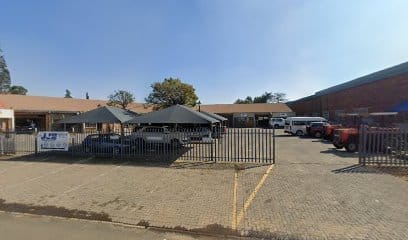
Operational details shared in the public materials indicate Sasolburg as the focal location, with operations extending to Sasolburg’s broader Free State area and related mining and processing sites. The business operates from Buffalo Park, Hennie Grove Street in Sasolburg, and maintains a clear focus on consistent, on-time service delivery, safety compliance, and competitive pricing as part of its value proposition.
What customers typically receive
- High-pressure water jetting with machines rated up to 2800 bar for robust blast cleaning tasks.
- Vacuum cleaning capabilities with quick-response units for effluent collection and site clearance.
- Chemical cleaning options supported by a 1000-litre pickling rig for surface preparation.
- Decontamination and demolition services for contaminated equipment and small-scale plant systems, including cyanide-related remediation in mining contexts.
- Shutdown project support for minor and major works, with on-site safety planning and risk assessments.
- On-site logistics, maintenance of equipment, and a stock of spare parts to minimise downtime.
Practical tips for customers
- Clarify desired end-state for asset surfaces (e.g., clean steel, coated surfaces, or passivated finishes) to select the appropriate jetting pressure and cleaning method.
- Provide access and potential effluent handling requirements early to ensure compliant waste management planning.
- Discuss safety requirements and on-site PPE expectations, given the emphasis on hazard assessments and zero-injury commitments.
- Consider the need for cyanide decontamination or other specialised processes if mining or chemical processing tasks are involved.
- Coordinate with the administrative contact points for scheduling, documentation, and workplace safety certifications as part of the work plan.
Sasolburg
Free State
South Africa
Sorry, no records were found. Please adjust your search criteria and try again.
Sorry, unable to load the Maps API.
Sasolburg Blast Cleaning Services: Surface Preparation and Cleaning in the Free State
In Sasolburg, a town renowned for its industrial activity within the Free State, blast cleaning services play a crucial role in preparing metal and concrete surfaces for coating, maintenance and refurbishment. These services are commonly sought by engineers, facilities managers and asset owners who require reliable rust and paint removal, surface texture modification and thorough cleaning prior to protective coatings or concrete repair. The approaches outlined here reflect typical industry practice in the region, focusing on practical outcomes, safety, and suitability for local environments.
Professional blast cleaning covers a range of techniques designed to remove contaminants and achieve a consistent surface profile. Abrasive blasting employs dense grains such as steel grit, copper slag or mineral abrasives to strip old coatings, rust and oxides. Shot blasting, a similar approach, uses metallic or non-metallic media to impart a uniform roughness that enhances coating adhesion. In many Sasolburg projects, the choice of method depends on the substrate, the level of contamination, and the desired surface texture. Concrete surfaces may also be prepared via specialised blasting or micro-abrasive methods to remove laitance, contaminants and old coatings without compromising substrate integrity.
Typical applications include the preparation of storage tanks, pipelines, structural steelwork, fabrication modules and concrete platforms. Blast cleaning is often followed by inspection and verification of surface cleanliness and roughness to ensure compatibility with subsequent coatings. The aim is to create a stable, clean surface that improves coating performance, reduces premature coating failure and extends asset life in a climate characterised by temperature fluctuations and humidity.
For clients in Sasolburg, the practical workflow usually involves an initial assessment to determine the appropriate blasting technique, media choice and abrasive consumption. Safety and environmental considerations are prioritised, with attention given to the containment of blasting dust, worker protection, and waste handling. Local regulations may influence permit requirements, noise management, and the handling of spent media and debris. These factors contribute to scheduling decisions, often balancing production needs with workforce safety and environmental stewardship.
Once a suitable method is selected, the surface is prepared according to industry norms. This typically includes masking of adjacent areas, protection of sensitive equipment, and controls to minimise the dispersion of dust and debris. The blasting operation proceeds in a controlled fashion, with operators monitoring blast intensity, nozzle distance, and dwell time to achieve the desired surface profile while avoiding over-preparation or under-cleaning. After the blasting phase, a visual inspection and, where applicable, surface testing conclude the process to verify cleanliness and roughness before the next stage, usually coating or repairs.
Clients can expect clear communication about project scope, timelines and safety measures. Competent operators maintain discipline around PPE usage, fall protection where required, and the use of suitable containment to protect workers and surrounding areas. Equipment is routinely inspected for reliability, and compliant practices regarding dust suppression and waste disposal are standard features of reputable providers in the Free State.
When planning blasting work in Sasolburg, consideration should be given to substrate sensitivity, coating compatibility, and corrosion risk. The climate, which includes variable humidity and temperature swings, can influence drying times for subsequent coatings. Selecting an experienced contractor with a track record in industrial environments is essential to achieving durable results, with attention to site-specific constraints such as access, noise thresholds and proximity to populated or sensitive zones.
In summary, blast cleaning services in Sasolburg offer practical surface preparation for metal and concrete assets, emphasising surface cleanliness, controlled material removal and appropriate surface profiling. The resulting condition supports reliable coatings, extended asset life and safer, more efficient maintenance programmes across industrial facilities in the Free State.